ArcelorMittal and BHP to capture carbon at Belgian steel plan
ArcelorMittal, BHP, and Mitsubishi Heavy Industries have partnered to test a full-scale carbon capture facility at a steel plant in Belgium, aiming to reduce emissions from one of the world's most carbon-intensive industries.
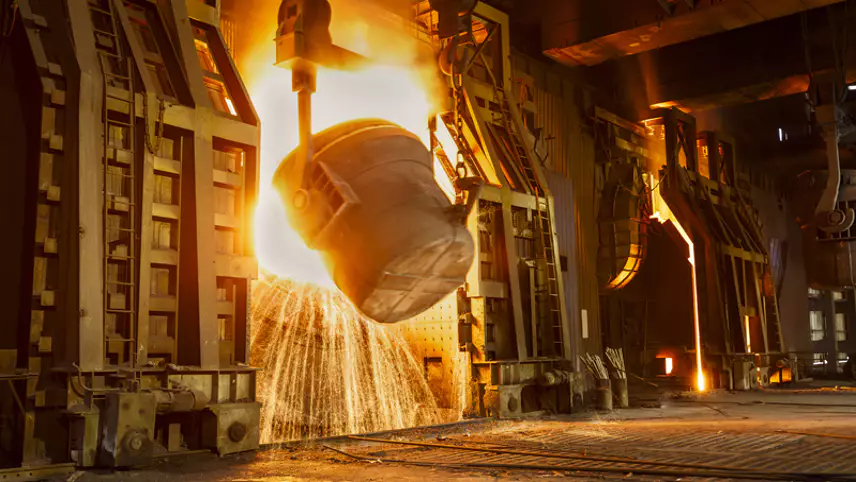
ArcelorMittal and BHP Group have announced plans to test a full-scale carbon capture operation at ArcelorMittal’s Ghent steelworks in Belgium, marking a significant step toward reducing emissions from the steel industry.
Steel production is responsible for nearly 10 percent of global greenhouse gas emissions, making it one of the world's most carbon-intensive industries. As pressure from investors, regulators, and environmental groups continues to grow, steelmakers are increasingly exploring innovative technologies to decarbonize their operations.
Reducing emissions is not only critical for steel producers but also for major mining companies such as BHP, whose iron ore products are widely used in steelmaking. Scope 3 emissions, generated when customers process and use mined commodities, remain a major challenge for mining companies seeking to achieve sustainability goals.
Collaboration to Accelerate Decarbonization
The latest initiative brings together ArcelorMittal, BHP Group, and Mitsubishi Heavy Industries Ltd. Under the agreement, Mitsubishi Heavy Industries will install a carbon capture, utilization, and storage (CCUS) facility at the Ghent steelworks in Belgium. BHP will provide financial support for the project.
The facility is expected to become one of the first full-scale carbon capture operations integrated into a primary steelmaking site, providing valuable insights into the viability of large-scale carbon capture technology within the steel sector.
Industry-Wide Push for Cleaner Steel Production
The steel and mining industries have been actively collaborating on various pathways to reduce emissions. These efforts include hydrogen-based direct reduction processes, the use of higher-grade iron ore, carbon offsetting initiatives, and carbon capture technologies.
BHP has already established partnerships with several major steel producers, including Tata Steel in India, POSCO in South Korea, and leading steelmakers in Japan and China, to accelerate the transition toward lower-carbon steel production.
Evaluating Carbon Capture Technology
According to BHP Chief Commercial Officer Vandita Pant, there is no single solution for achieving net-zero steel production. The Belgium project is expected to provide important data on whether carbon capture and storage technologies can be scaled effectively across the industry.
While carbon capture technology offers significant potential for reducing industrial emissions, it has faced criticism due to high implementation costs and concerns that investments in carbon capture may divert resources from direct emission reduction strategies.
Path Toward Net-Zero Steel
Despite ongoing debates, the project represents another major effort by global steelmakers and mining companies to explore practical solutions for decarbonization. The findings from the Ghent facility could play a key role in shaping future strategies for reducing emissions across the global steel value chain.